iPhone 18 Pro Max vs 17 Pro Max: Which One Is Better?
Discover the key differences between iPhone 18 Pro Max and 17 Pro Max, including camera upgrades, battery life, performance, display, and overall value.
Abu Bakar
iPhone 18 Pro Max vs iPhone 17 Pro Max: Is the Upgrade Worth It in 2026?
Updated November 3, 2026 | US pricing | Specification-based comparison with independent test results
Apple's latest Pro Max looks familiar. If you already own the 17 Pro Max, its screen, cameras, and speed are still excellent. Yet the 18 Pro Max changes a few things that matter: photography, gaming, charging, and battery life. Is that enough to justify upgrading? Let's look beyond the specifications.
iPhone 18 Pro Max vs 17 Pro Max: Specs at a Glance
| Feature | iPhone 18 Pro Max | iPhone 17 Pro Max |
|---|---|---|
| US launch price | $1,299 | $1,199 |
| Display | 6.9-inch OLED, 120Hz | 6.9-inch OLED, 120Hz |
| Processor | A20 Pro, 7-core GPU | A19 Pro, 6-core GPU |
| Rear cameras | Three 48MP cameras; variable-aperture main | Three 48MP cameras; fixed-aperture main |
| Front camera | 18MP Center Stage | 18MP Center Stage |
| Apple-rated video playback | Up to 45 hours | Up to 39 hours |
| Wired charging | 50% in about 15 minutes* | 50% in about 20 minutes* |
| Storage | 256GB–2TB | 256GB–2TB |
| Weight | 249g | 233g |
Apple's charging claims require compatible separately sold adapters. Battery figures are laboratory estimates, not typical screen-on time.
Design and Display: Familiar, for Better and Worse
Both phones use an aluminum body, Ceramic Shield protection, IP68 water resistance, and a sharp 6.9-inch OLED display. ProMotion refresh rates reach 120Hz, while Apple's outdoor peak-brightness rating remains 3,000 nits. Daily viewing should feel very similar.
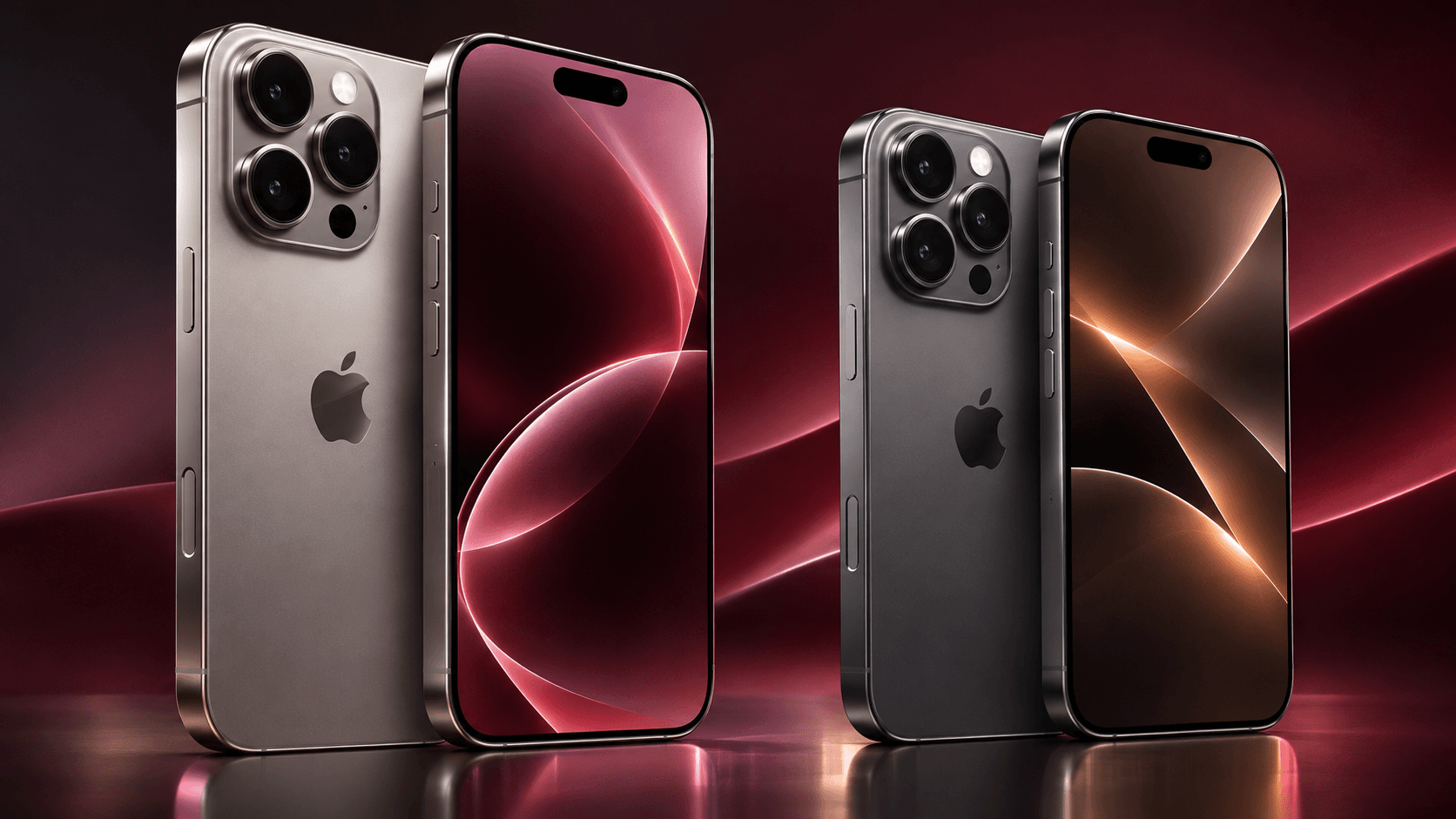
The iPhone 18 Pro Max has a smaller Dynamic Island and new finishes, including Burgundy. There's a trade-off, though: at 249g, it's 16g heavier than the 17 Pro Max. That's noticeable if you dislike heavy phones.
Display winner: Tie. The newer screen isn't a compelling reason to upgrade.
Performance: More Headroom, Not a New Everyday Experience
The A20 Pro introduces a 2-nanometer design, a seven-core GPU, and a more powerful Neural Engine. Its redesigned cooling helps sustain speed.
That matters for gaming, video editing, and demanding on-device AI. Tom's Guide recorded substantially stronger benchmark scores for the 18 Pro Max. But browsing, messaging, navigation, and social apps already run smoothly on the A19 Pro.
Performance winner: iPhone 18 Pro Max, especially for demanding users.
Cameras: The Upgrade That Actually Changes How You Shoot
At first glance, the rear cameras seem identical: three 48MP sensors covering main, ultra-wide, and telephoto duties. Both offer 4x optical telephoto and 8x optical-quality zoom, plus an 18MP Center Stage selfie camera.
The difference is the variable-aperture main lens. The iPhone 17 Pro Max uses a fixed f/1.78 aperture; the 18 Pro Max can switch between f/1.48, f/1.8, f/2.8, and f/4.0.
In plain English, the newer phone can let in more light for darker scenes or narrow its opening to keep more of a group photograph in focus. It also gives photographers direct aperture and exposure controls rather than relying entirely on automatic processing.
Independent samples show improvements in low light and background blur. Daylight photos and portraits, however, can look very similar.
Camera winner: iPhone 18 Pro Max, but serious photography enthusiasts will appreciate the difference most.
Video Recording: Both Are Already Pro-Level
Both phones record 4K Dolby Vision footage up to 120fps on the main camera and support ProRes RAW, Apple Log 2, stabilization, and external recording.
The newer model adds more flexible pro controls, improved low-light processing, and Cinematic recording up to 4K at 60fps, versus 30fps on the 17 Pro Max.
Creators who color-grade footage or shoot frequently at night have a reason to consider the upgrade. For family videos, travel clips, and social posts, either phone is excellent.
Battery and Charging: Better, but Keep Expectations Realistic
Apple rates the iPhone 18 Pro Max for up to 45 hours of video playback, compared with 39 hours for the 17 Pro Max. That's an impressive headline, but independent results provide better context.
In Tom's Guide's continuous 5G web-browsing test, the phones averaged 18 hours 27 minutes and 17 hours 54 minutes, respectively. That's only a 33-minute improvement under that particular test.
Charging is a clearer gain: Apple says the 18 Pro Max reaches 50% in roughly 15 minutes with a 60W-capable USB-C adapter supporting AVS. The 17 Pro Max takes about 20 minutes with a 40W adapter. Both support 25W MagSafe charging.
Battery winner: iPhone 18 Pro Max, although your actual improvement will depend on usage.
Software, AI, and Connectivity
The 18 Pro Max ships with iOS 27 and Apple's newer Siri AI experience. The 17 Pro Max can also run iOS 27 and supports Apple Intelligence, so many familiar software features aren't exclusive to the new phone.
The A20 Pro offers more processing headroom for AI tasks, while Apple's newer C2 modem targets better cellular efficiency and reliability. Both have Wi-Fi 7, Bluetooth 6, Face ID, USB-C, satellite safety tools, and US eSIM.
Price and Value: Where the 17 Pro Max Fights Back
The iPhone 18 Pro Max starts at $1,299 in the US, $100 above the 17 Pro Max's original $1,199 launch price. Both offer 256GB through 2TB storage.
A discounted 17 Pro Max may offer better value. Compare final unlocked prices, used-device battery health, and carrier trade-in terms—not just monthly payments.
Which One Should You Buy?
Choose the iPhone 18 Pro Max if mobile photography, demanding games, pro video tools, or faster top-ups matter to you.
Choose the iPhone 17 Pro Max if you want a premium large-screen iPhone at a meaningful discount.
Keep your existing 17 Pro Max if it's working well. Most day-to-day tasks won't feel dramatically different.
Final Verdict: Newer Is Better, but Not Necessarily Worth It
The iPhone 18 Pro Max is the better phone on paper, and its camera flexibility, extra power, and faster charging are genuine improvements. Still, the 17 Pro Max remains remarkably competitive in display quality, everyday speed, video, and software.
If you're buying fresh and the price gap is small, the iPhone 18 Pro Max makes sense. If you already own the 17 Pro Max, I'd save the money unless you have a specific use for the camera upgrades. The best upgrade is one you'll actually notice, not simply the newest model.
Research sources:Apple iPhone 18 Pro Max specifications, Apple iPhone 17 Pro Max specifications, Tom's Guide independent testing, and DPReview camera samples.